Cold Facts Magazine
Collaborating in the Cold
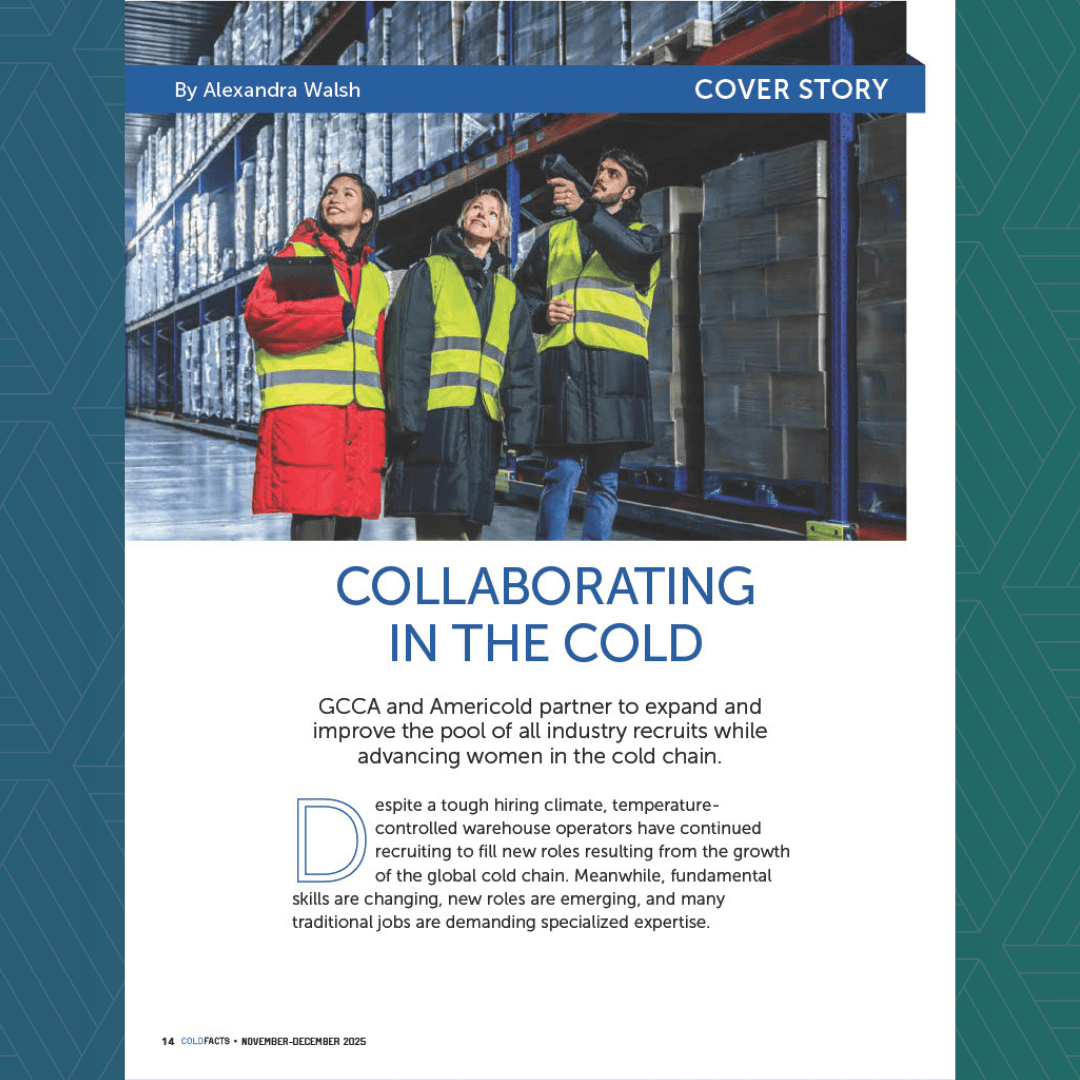
GCCA and Americold partner to expand and improve the pool of all industry recruits while advancing women in the cold chain.
Despite a tough hiring climate, temperature-controlled warehouse operators have continued recruiting to fill new roles resulting from the growth of the global cold chain. Meanwhile, fundamental skills are changing, new roles are emerging, and many traditional jobs are demanding specialized expertise.
GCCA launched the Women in the Cold Chain initiative to address the need for a broad, talented, and diverse workforce. Women in the Cold Chain emphasizes gender diversity in temperature-controlled warehousing, logistics, transportation, construction, and international development. The program aims to strengthen the cold chain industry by attracting, supporting, recognizing, and promoting women’s talent and success.
In the past, GCCA has spearheaded programs to recognize women in the cold storage industry, spotlight their roles, and demonstrate the careers available to them in the industry, says GCCA President and CEO Sara Stickler. “Those programs evolved to have a broader, more robust focus on advancing women in the cold chain and ensuring they have the training to be successful – we’re trying to keep them in the cold chain by supporting them through professional development and not just recognition.”
Stickler adds that Women in the Cold Chain can help best-in-class operators recruit, retain, and advance a skilled workforce, and while the programs discussed focus on women, it doesn’t come at the expense of another workforce. “We want to help advance all segments of the industry’s workforce and expand the pool of talented candidates available to grow our industry. We need to have as many qualified folks available as possible.”
“Women in the Cold Chain is intended also to attract new women to the cold chain, whether they are recent college graduates or young students right out of high school or trade school,” adds Lindsay Shelton-Gross, Senior Vice President, Global Communications, Marketing, and Strategic Initiatives at GCCA. “We also hope to appeal to women who might be looking for a career shift or pivot or women who might be returning after an absence from the workforce – Women in the Cold Chain is much more than just a space to collectively talk about your experiences in the industry – it provides thought leadership as well as a high level of professional training.”
Women in Americold
Angela D’Amato serves as Americold’s Vice President of Business Development for Europe, where she leads strategic growth initiatives, customer engagement, and development across the region. Her career spans multiple areas of logistics, giving her a broad perspective on global supply chain challenges.
Cindy Parker is Americold’s Director of Operations for District One in the Southeast Region, overseeing nine facilities in Arkansas and driving operational performance, safety, and continuous improvement. Parker has spent her entire career in the cold chain, building deep expertise in operations and facility leadership.
While they might not have similar professional paths, D’Amato and Parker do share a passion and energy to give back to their communities and develop future talent. “How do we enrich and give back to young, aspiring talent? That’s why we initially got involved in GCCA’s Women in the Cold Chain program – we wanted to make a difference in the lives of young people as well as the broader community,” says D’Amato. “That is what led to my immediate connection with Cindy, and then we pursued partnership with the GCCA, which is exciting.”
D’Amato adds that Americold launched its own Women in Americold initiative supported by three foundational pillars: professional development, communication engagement and networking opportunities – with elements delivered in partnership with GCCA. “The cold chain industry is evolving rapidly, and talent diversity is essential to meeting global challenges. We find it’s even more imperative that women are not just included, but that we’re leaders in the industry.”
GCCA echoes this commitment. “Our partnership with Americold is intended to help provide professional development and thought leadership opportunities for women in the cold chain to share their expertise and knowledge,” says Stickler. “We’re elevating them in their expertise, not just for being a woman, but because they are the best person qualified to be in that role. And that’s smart business.”
Inaugural Events
D’Amato notes that ultimately, Americold’s partnership with the GCCA reinforces shared values: advancing women in logistics, creating visibility, and building a community. “We sponsored the inaugural Women in Cold workshop at this year’s GCCA Convention, because we’re investing in a movement that aligns with our internal Women in Americold initiative.”
The inaugural workshop was a breakout session held during lunchtime with about 40 women attending. Developed specifically for women executives, senior leaders, and high-potential emerging leaders in the cold chain industry, the three-hour interactive workshop was created to empower the participants to define their leadership style and the energetic, emotional, and reputational impact they have on others.
“It was significant for women to get other women together, says Parker. “The presentation about making ourselves visible and empowered was important.”
D’Amato reports she helped host a similar event at Anuga, the food industry trade fair in Cologne, Germany, a month after the U.S. workshop. It was also a breakaway session with approximately 40 people in attendance.
“It was so interesting that there were only three women in the room, but all our industry peers in the cold industry joined us,” recalls D’Amato. “For us, it’s a positive that men, women and our peers are looking at Americold to potentially identify how we could collectively partner to make a difference. It’s encouraging.”
C-Suite Buy-In
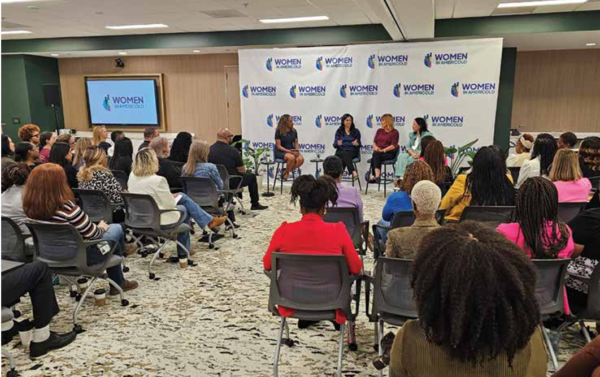 From the outset, Americold’s executive leadership team, led by CEO Rob Chambers and executive sponsor Bryan Verbarendse, President, Americas, committed to making Women in Americold a priority.
“Our first steps were to sit in a room and brainstorm how it could work and determine which affiliations and industry leaders would be partners to accelerate and assist us in being change agents for women in cold,” says D’Amato. “Ultimately, it started with top management support and grew when women across the company stood up and said, ‘this is how we would like to make a difference, and this is how we could have an impact.’”
Stickler thinks the proposition to the C-Suite to buy into Women in Cold is best proposed as a business decision – without change, you will lose employees who will leave the industry, and that’s bad business because you’ve invested in them, and now that money is wasted.
Parker adds that leadership engagement is accelerated with a clear plan. “Approach the C-suite with solid ideas, and they’ll be more open-minded. They need to ensure women have every opportunity to succeed if they want to attract, retain, and grow top talent.”
“Leadership needs to be involved as ideally, company employee resource groups are providing recommendations and solutions to the leadership team on how to make the workplace more accepting of different populations, which in turn will help provide a best-in-class workforce and new opportunities to help the business grow,” explains Shelton-Gross.
Recruiting and Retaining Women
Attracting and retaining top talent requires more than competitive pay – it demands alignment with values. “A talented job candidate who receives offers from multiple companies will look at each company’s Environmental, Social, and Governance (ESG) track record; its sustainability, ethical practices, and long-term viability criteria; the contents of its code of conduct; and the direction the company has been heading,” Parker points out.
D’Amato concurs and notes that “when millennials and Gen Z evaluate employers, they look at whether the organization reflects their values. Diversity and inclusion are certainly selling points.”
“Much as we want to attract the right talent, we want to be the employer of choice when it comes to the job market,” explains D’Amato. “It’s not only about finding people. It’s a two-way street, and we want job seekers to look at our company and think, ‘I want to join that business, because I believe they are operating in alignment with my personal values, and I think I can make a considerable difference.’”
For Parker, change is all about reach. “The reach of Women in Americold will be greater than just people who are currently in the working environment. We may not immediately be able to get six-year-old girls to tell their parents that they want to work in the cold storage industry, but we are creating an industry sector that is attractive to talented people.”
Where To Begin?
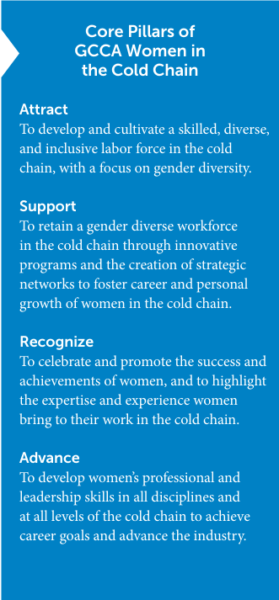 In the early days, D’Amato says the Women in Americold team spent considerable time reflecting, pausing, and planning. They also had the advantage of several team members with prior experience running diversity programs.
“We started by listening and built something that is reflective of our workforce,” advises D’Amato. “Partnering with GCCA will certainly accelerate the scale of our program, so it’s important to find partners with links to the industry. But most importantly, listen to your people – the answers lie within your workforce.”
Stickler suggests you don’t need a full-blown employee resource group or a completely realized process to start a conversation with employees regarding how they feel about coming to work, or how they think the company could better support them. “It could help the business better support its employees who in turn show up in a better way to deliver for their organization,” says Stickler. “Listening to those voices is going to help retain your employees longer so they don’t leave you for the company that is doing these things or is announcing they have large resource groups.”
Objectives and Expectations
Women in Americold is built on three pillars – development, networking, and community.
“The goal is to create a culture where women thrive, whether it’s within a facility, on the road, or in the boardroom, that’s our goal for the short to medium term,” D’Amato explains.
Parker emphasizes inclusion over metrics: “We want more women entering and advancing in the cold chain, but success also means women feeling engaged and valued.”
Parker suggests, “the ultimate goal is that women at Americold can live up to their full potential and feel that they want to go to work every day, and they belong there.”
“Success is women leading teams, speaking at industry events and in panel discussions, and mentoring other women,” says D’Amato.
“By highlighting Women in Americold, we’re able to demonstrate one way to engage women and female-identifying employees,” says Shelton-Gross. “We are hopeful that the partnership helps inspire a larger conversation within the industry to look at solutions-oriented opportunities to attract and retain top talent.”
Stickler sees numerous opportunities to bring diverse opinions and skill sets to cold storage and logistics companies. “And those are going to be the kind of viewpoints and talent that we’re going to require to build a resilient supply chain. The world is changing, and we need people in the room who understand and are part of that change, which includes a more diverse population, and begins with as many qualified candidates as possible.”
Contact Us
COLD FACTS Magazine and media inquiries: Lindsay Shelton-Gross, Senior Vice President, Global Communications, Marketing and Strategic Initiatives, Global Cold Chain Alliance
Editorial Ideas: Please contact Editor-In-Chief Alexandra Walsh
Advertising Opportunities: Contact Jeff Rhodes, Vice President of Sales, MCI USA Sales