Cold Facts Magazine
The Things We Move and Store
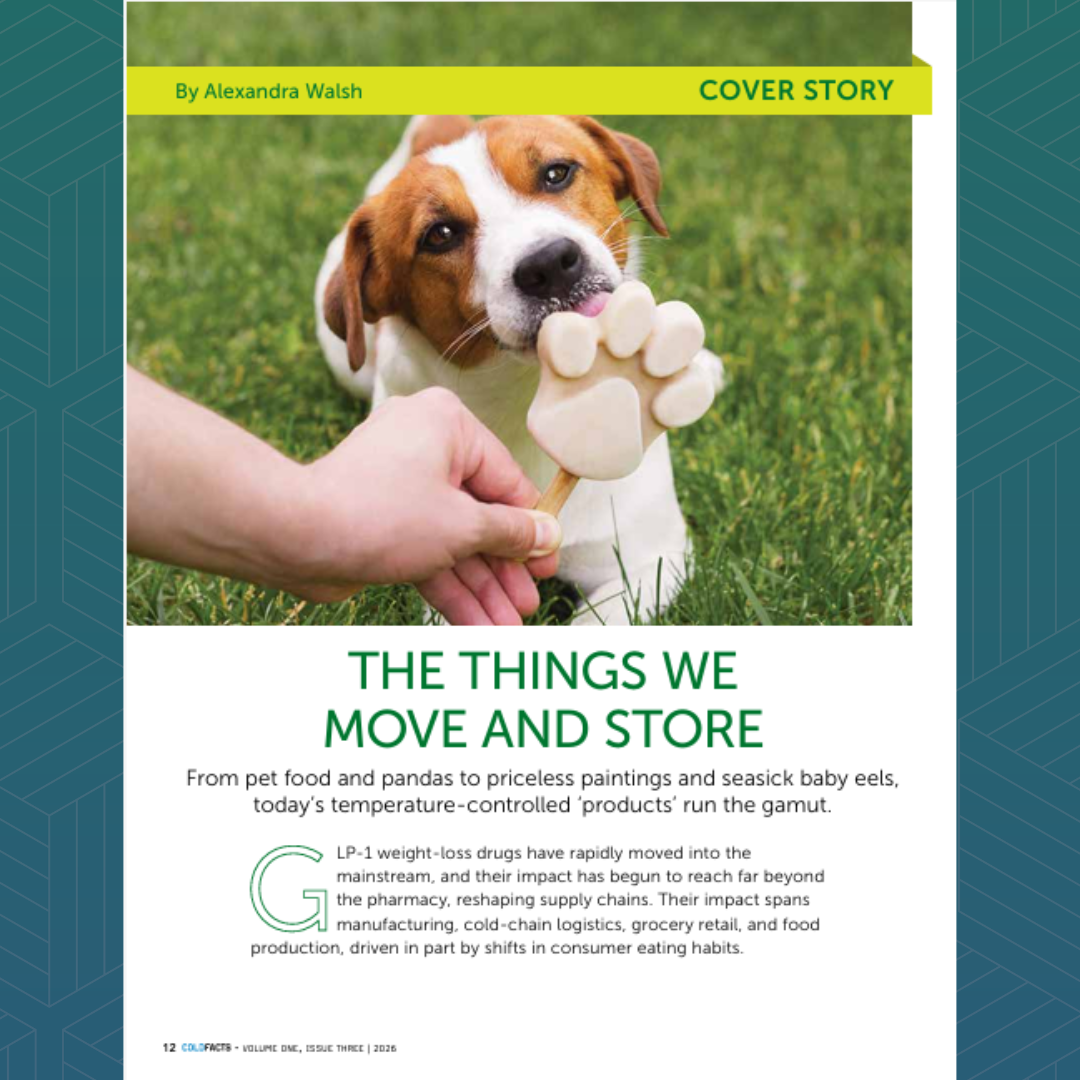
From pet food and pandas to priceless paintings and seasick baby eels, today’s temperature-controlled ‘products’ run the gamut.
GLP-1 weight-loss drugs have rapidly moved into the mainstream, and their impact has begun to reach far beyond the pharmacy, reshaping supply chains. Their impact spans manufacturing, cold-chain logistics, grocery retail, and food production, driven in part by shifts in consumer eating habits.
Surging demand has forced food manufacturers to rethink production, retailers to adjust product mixes and portion sizes, and pharmaceutical companies to expand cold-chain capacity and output.
These drugs require strict handling. They must be kept between 35°F and 46°F, demanding reliable cooling, careful planning, detailed documentation, and expanded temperature-controlled storage and packaging. Companies are also rethinking warehouse processes, from packaging to inventory management.
As a result, operators are broadening their definition of temperature-sensitive cargo beyond traditional food and beverage products.
Transportation Challenges
 The most pressing challenge in pharmaceutical temperature-sensitive supply chains is maintaining uninterrupted temperature integrity across the entire chain.
What’s compounding the challenge right now is scale says Dr. Janeth Gabaldon of the University of Arkansas and a member of the GCCA’s Council of Scientific Advisors (CSA) specializing in emerging supply chain technologies. She believes the explosive demand for GLP-1 has outpaced the cold chain infrastructure designed to support it. “We’re seeing strain at every node (manufacturing, distribution, and dispensing). GLP-1 is manageable in controlled environments but becomes risky across complex, multi-modal supply chains.”
Dr. Gabaldon points out that’s why visibility is also a critical gap. Real-time temperature monitoring, IoT-enabled sensors, and data logging have improved significantly, but adoption is uneven across the supply chain. She says the weakest links tend to be the handoff points between parties, where temperature drops can occur.
Security is another growing concern due to the high market value of these medications. Cargo theft, counterfeit products, and diversion risks are increasing pressures across pharmaceutical logistics networks.
“This requires stronger chain-of-custody controls, tracking technologies, and secure transportation protocols, which increase operational costs for companies,” says Dr. Gabaldon. “The Drug Supply Chain Security Act (DSCSA) was designed to address this through serialization and traceability requirements, but implementation has been uneven, and enforcement is still catching up.”
The most challenging best practice for transporting glucagon-like peptide -1 (GLP-1) meds is preventing temperature excursions and corresponding heat or freeze damage during the unpredictable last-mile delivery to a patient’s doorstep, explains Dr. Patrick Brecht with PEB Commodities and CSA expert in refrigerated transportation. “The final leg of transit from the carrier’s delivery vehicle to the patient retrieving the package is the highest-risk phase. Packages left in direct sunlight, on hot porches, or in freezing mailboxes during the summer or winter can experience temperature excursions that can destroy the peptide structure.”
Dr. Brecht says to lessen the risk of damage to GLP-1 medications during the last mile, they should be shipped in validated, insulated containers combined with pre-conditioned phase-change materials (PCMs) or frozen gel packs tailored for the 2 C to 8 C range. Recipients (patients) should transfer the medication to the middle shelf of their refrigerator immediately upon receipt.
 According to Dr. S. Paul Singh of Michigan State University and SAC packaging and labeling expert, the International Safe Transit Association (www.ista.org) has, with participation from major pharmaceutical companies, developed a test protocol to qualify packaging systems that require strict temperature control in the single parcel shipping environment of UPS and FedEx. In addition, participating packaging companies have developed insulated packaging that can provide such strict temperature control during shipping.
Beyond Food and Pharma
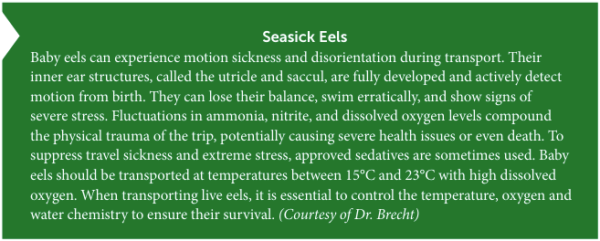
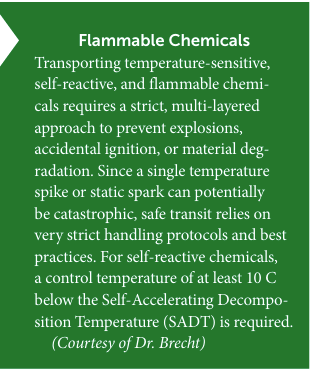
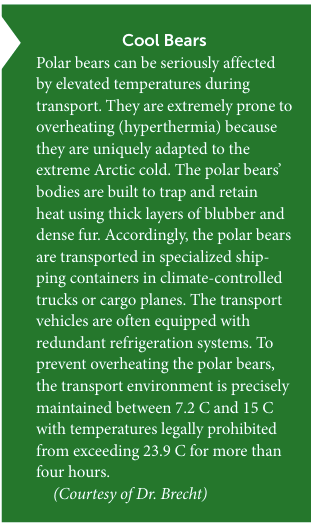
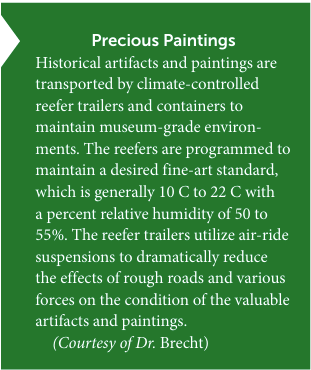
“There is some fascinating nontraditional ‘cargo’ beyond pharmaceuticals and vaccines that are stored and transported under temperature control such as baby eels that can get seasick, live escargot, honeybees, blood plasma, historic artifacts and paintings, Christmas trees, cut flowers, zoo animals like polar bears and pandas, volatile/self-reactive and flammable chemicals and more,” notes Dr. Brecht.
Dr. Singh adds other products that require temperature and humidity control during storage extend to antique furniture, cigars, flavors, aroma alcohols, musical instruments, precious art and rare books. “Some items such as wood, paper, and cigars, have to be preserved at low humidity to avoid mold as well as physical deformation (warping).”
Dr. Gabaldon notes the list is longer than most people expect. Her examples of temperature-sensitive products requiring transport and storage include fine wine, biological specimens such as organs or tissue samples, seeds, agricultural genetics, certain industrial chemicals, electronic components sensitive to thermal cycling such as composites and adhesives, cosmetics, and personal care products with active biologicals.
“Each has its own temperature, humidity, handling requirements, regulatory oversights, and security concerns, which is part of what makes the temp-sensitive chain such a rich and complex field,” says Dr. Gabaldon.
Purpose-Build or Retrofit
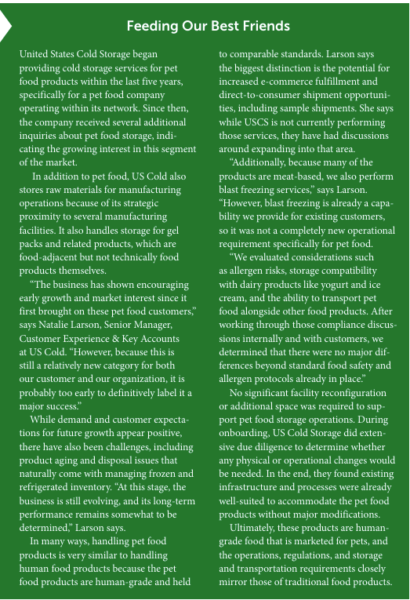 Can traditional cold storage warehouses be retrofitted to accommodate non-food temperature-controlled products? Yes, but …
“Retrofitting would likely require investment in monitoring systems, qualified personnel, backup power redundancy, controlled-access zones, audit systems, and regulatory compliance protocols,” explains Dr. Gabaldon.
For archival documents and fine art, the environmental requirements differ substantially. Dr. Gabaldon points out these are niche but real applications, and purpose-built art storage facilities exist. “A food warehouse retrofit is theoretically possible but would require careful assessment. Temperature is only one factor in these supply chains; humidity control, vibration minimization, lighting exposure, and contamination prevention are equally important.”
Refrigerated trailers can maintain exact and uniform temperature tolerances for pharma items when software is used to properly program the trailer’s microprocessor.
“The refrigerated trailer must undergo precise empty and loaded validation mapping studies to ensure that there are no hot or cold microenvironments within the cargo. Mapping, validation and empirical studies are systematic evaluations that are used to record and analyze temperature variations throughout a refrigerated trailer’s cargo space,” notes Dr. Brecht. “These studies ensure that pharmaceuticals and vaccines are uniformly chilled or frozen during the entire trip thereby meeting or exceeding strict regulatory and quality standards.”
Regulatory Differences
 Transporting temperature-sensitive pharmaceuticals are regulated by multiple agencies. United States Pharmacopeia (USP): USP Chapter 1079 outlines, in part, specific temperature ranges for storage and shipping such as controlled room temperature/room temperature, refrigerator, cooler and freezer medications.
The U.S. Food and Drug Administration (FDA) regulates the transportation of pharmaceuticals through enforcement of Good Distribution Practices (GDP) and Title 21 of the Code of Federal Regulations (CFR). The FDA’s regulatory oversight during transit focuses on temperature control, traceability, security and chain of custody, sanitation, and recordkeeping.
The Drug Supply Chain Security Act (DSCSA) requires tracking and tracing of prescription drugs across the distribution supply chain.
The International Maritime Dangerous Goods (IMDG) Code applies to any pharmaceutical product transported by sea that meets the criteria for classification as a hazardous material or dangerous goods. “Although pharmaceuticals are highly regulated, the points and counterpoints for more regulations and corresponding economic, human safety, and logistical hurdles are hotly deliberated,” Dr. Brecht points out.
Dr. Gabaldon’s view is that the gap is not in the volume of regulation, but in the consistency of enforcement and the speed of regulatory adaptation to new realities. “For example, the GLP-1 distribution, home delivery of specialty medications, and AI-driven monitoring systems are all outpacing the regulatory frameworks meant to govern them,” she says. “I would advocate for smarter, faster-adapting regulation over more regulation, particularly standards that address last-mile accountability and real-time excursion reporting.”
A Reconfigured Cold Chain
 Dr. Gabaldon believes the cold chain is already reconfigured from the impact of GLP-1 medications. She explains that historically, many pharmaceutical cold chains were designed around seasonality, episodic demand, or specialty demand. The demand trajectory for GLP-1 medications is unlike anything the pharmaceutical cold chain has experienced in terms of volume, velocity, and geographic breadth.
“These aren’t specialty medications for small patient populations anymore; they’re becoming mass-market products with patient populations in the millions. GLP-1 is introducing sustained, large-scale consumer demand that resembles a hybrid of pharmaceutical and retail distribution. In many ways, it is pushing the cold chain toward becoming more consumer-facing, data-driven, and resilient,” Dr. Gabaldon says.
She points out it also strengthens the case for purpose-built last-mile solutions for temperature-sensitive pharmaceuticals, including smart lockers, temperature-controlled delivery vehicles, and pharmacyto-patient logistics networks.
“From a research perspective, I find this moment fascinating: the human systems dimension, including patient behavior, provider workflows, delivery personnel training, and regulatory compliance culture, will determine whether the technology investments translate into safe, reliable delivery,” says Dr. Gabaldon.
***
Contact Us
COLD FACTS Magazine and media inquiries: Lindsay Shelton-Gross, Senior Vice President, Global Communications, Marketing and Strategic Initiatives, Global Cold Chain Alliance
Editorial Ideas: Please contact Editor-In-Chief Alexandra Walsh
Advertising Opportunities: Contact Jeff Rhodes, Vice President of Sales, MCI USA Sales