Cold Facts Magazine
Volume One, Issue Three | 2026
Shifting Corridors, New Horizons, and Saturated Capacity
The global temperature-controlled supply chain does not stand still—and neither does the data driving it. In this issue of COLD FACTS Magazine, we break down an industry at a fascinating inflection point. From the rapid operational pivots necessitated by geopolitical tension in the Middle East to Canada’s defensive, highly strategic approach to the CUSMA trade agreements, global logistics networks are trading traditional, rigid efficiency for absolute resilience and multi-mode flexibility.
Concurrently, we take a deep dive into the expanding definition of temperature-sensitive cargo. Fueled by the mass-market explosion of pharmaceutical innovations like GLP-1 weight-loss medications, cold chain operators are rapidly scaling to safeguard everything from priceless fine art to live, seasick baby eels. Complete with the Global Cold Chain Alliance’s highly anticipated 2026 “Top Lists” of warehouse capacity and updates from the GCCA Africa Conference, Issue 3 delivers the foundational market intelligence required to lead an indispensable infrastructure into the future.
Features
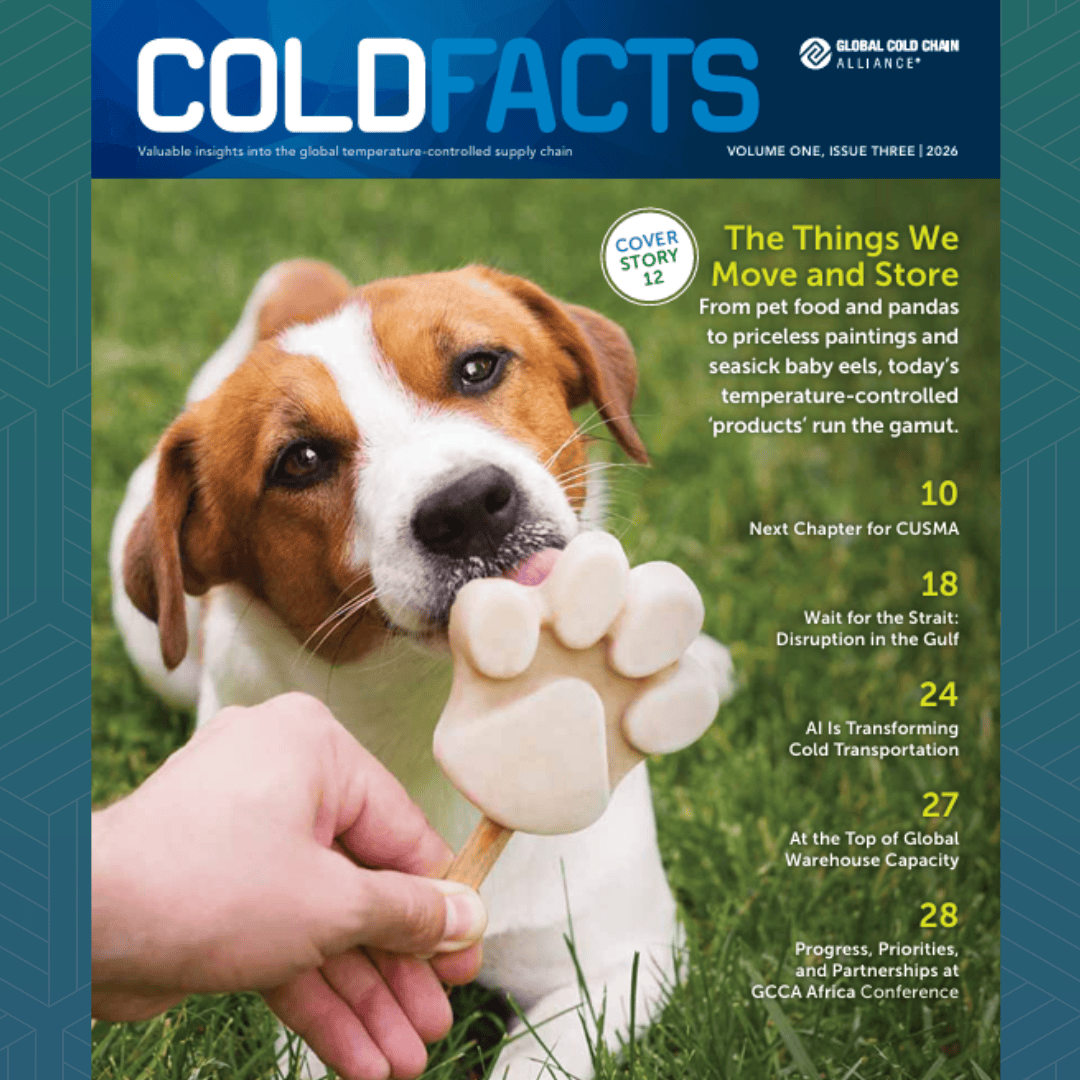
COVER STORY | The Things We Move and Store
The explosive, mass-market demand for GLP-1 weight-loss medications has officially reconfigured the pharmaceutical cold chain. Needing strict environment mapping to protect delicate peptide structures during last-mile delivery, these mass-volume drugs are forcing operators to expand beyond traditional boundaries. Discover how today’s cold chain is adjusting parameters to move everything from high-value biologics and human-grade pet food to seasick baby eels and museum-grade historical paintings.
By Alexandra Walsh
The Next Chapter for CUSMA
As the mandatory review of the Canada-United States-Mexico Agreement (CUSMA) gets underway, Canada is executing a highly calculated, defensive trade strategy. Unlike its southern neighbors, the core debate inside Canada is not whether to renew the agreement, but how to effectively mitigate trade uncertainty and defend critical agricultural supply chains from enduring tariffs. This expert analysis details what Canada’s strategic patience means for integrated cross-border logistics.
By Jean-Michel Laurin
Wait for the Strait
The late-February 2026 closure of the Strait of Hormuz abruptly throttled global maritime traffic, sending deep shockwaves through global energy markets and regional food chains. In response, UAE cold chain operators and government leaders rapidly established land-based “Green Corridors” and alternative port structures to secure national food supply lines. Read how regional resilience, flexible daily storage options, and tactical pivots saved a market in crisis.
By Isobel Davidson
AI is Transforming Cold Transportation
Shippers and carriers are moving past basic tracking and entering a sophisticated ecosystem anchored in artificial intelligence. Raw telematic data is being synthesized by machine-learning models to distinguish between normal door openings and critical, real-time temperature excursions at vulnerable modal handoff points. Explore how simulation modeling, predictive analytics, and end-to-end visibility are deciding who succeeds in modern logistics.
By Keith Loria
At the Top of Global Warehouse Capacity
The Global Top 25 cold storage providers now control an unprecedented 7.76 billion cubic feet of capacity—marking a staggering 41.2% surge since 2021. Propelled by heavy consolidation across Europe and aggressive expansion throughout Latin America, the entry threshold for the North American market has risen to new heights. Review the structural takeaways from GCCA’s official 2026 “Top Lists” report.
By GCCA Staff
Progress, Priorities, and Partnerships at Africa Conference
Massive population growth is straining Africa’s regional capability to store and distribute safe, fresh food. Gathering in Johannesburg, this year’s regional conference zeroes in on strengthening climate-smart infrastructure, expanding cold storage networks into developing rural corridors, and executing critical reefer rail pilot programs to relieve severe port congestion.
By GCCA Staff
Contact Us
COLD FACTS Magazine and media inquiries: Lindsay Shelton-Gross, Senior Vice President, Global Communications, Marketing and Strategic Initiatives, Global Cold Chain Alliance
Editorial Ideas: Please contact Editor-In-Chief Alexandra Walsh
Advertising Opportunities: Contact Jeff Rhodes, Vice President of Sales, MCI USA Sales