

Articles
2026 International Day of Awareness of Food Loss and Waste
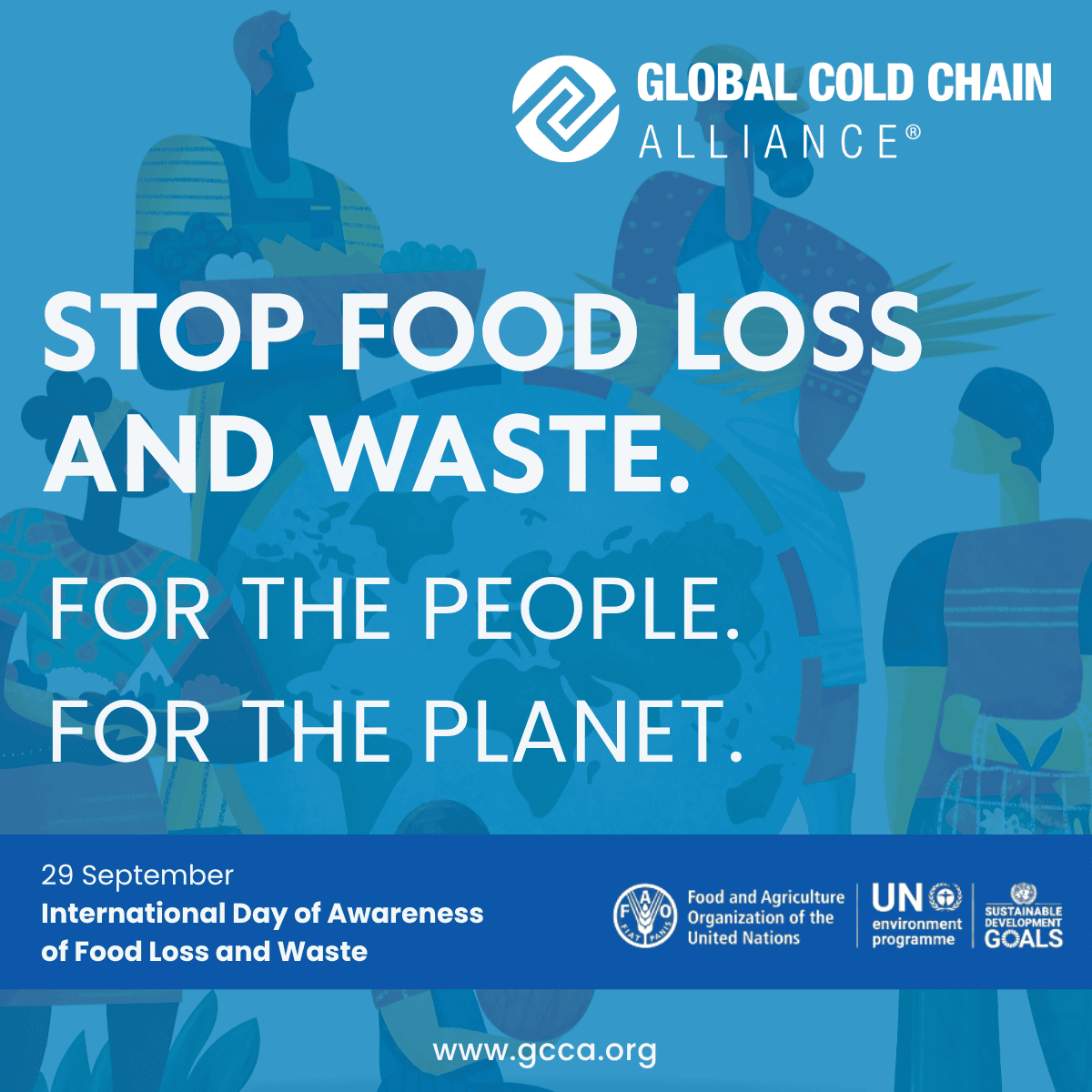
2026 International Day of Awareness of Food Loss and Waste
September 29th marks the international celebration and recognition of the UN International Day of Awareness of Food Loss and Waste. This year’s call to action asks for the expansion of efforts to reduce food loss and waste as a critical element of securing a sustainable food future for all through the theme: Transformative Potential of Reducing Food Loss and Waste.
To mark today’s international awareness day, the Global Cold Chain Alliance (GCCA) and Global Cold Chain Foundation (GCCF) are highlighting the ongoing work that contributes to this transformative potential.
International Projects
Many countries around the world face serious challenges in securing access to safe and reliable food due to lack of understanding, knowledge and investment in cold chain best practices. The GCCF facilitates multiple projects a year, in regions across the globe, to create supply chains that minimize food loss and waste and improve the availability of safe, quality food.
“The transformative potential of reducing food loss and waste begins with modernizing how we protect food throughout the cold chain – from farm to table. Our industry is the backbone of sustainable, resilient global food systems; and we are capable of feeding current and future generations. Unlocking food’s full potential requires expanding temperature-controlled logistics into emerging economies while scaling advanced waste-prevention innovations across more mature markets. Through decisive collaboration among cold chain leaders, governments, and development partners, we are turning ambitious waste-reduction targets into measurable global impact.”
— Amanda Brondy, Vice President Global Projects & Partnerships
Since 2002, GCCA has completed more than 120 projects, spanning 70 countries, dedicated to the proper handling and storage of perishable products and the development of systems and best practices for the safe, efficient and reliable movement of food to the people of the world.
Food Bank Support
GCCF’s Food Waste Reduction Initiative provides free membership to non-profit organizations working on food rescue and recovery. Non-profits gain access to resources on appropriate perishable commodity storage, handling, sanitary transportation and warehouse energy and efficiency. cy.
Food banks can access the expertise of the Council of Scientific Advisors, a group of academics with deep knowledge of commodity science, technical knowledge, and food safety. GCCA also works to connect these non-profits to the network of refrigerated warehouses, transportation assets, and design-build refrigeration firms throughout the organization’s membership.
With over 100 food bank member companies spanning 22 countries, GCCA is committed to the growth of this important sector of our membership collaborative and its positive effect on the Food Waste Reduction Initiative.
Measuring the Impact
GCCF involvement with food banks and food rescue groups allows these organizations to make connections with our members, particularly those who can provide storage and logistics support. This direct engagement allows for dialogue with technical experts and can help free up time for food banks to focus on their core goal- feeding their community.
Powering Food Banks Project
The GCCF was allocated a grant under the 2025-2027 Danone Institute North America (DINA) Sustainable Food Systems Initiative Focus on Food to implement a pilot study to reduce energy consumption in U.S. food banks. This pilot focused on banks operating refrigerated storage who could leverage the expertise of the private cold storage sector in refrigeration and energy usage. The Powering Food Banks (PFB) project posits that if energy costs are reduced, food banks will be able to reallocate these savings toward more impactful initiatives.
GCCA and GCCF have also supported the food banks as they implemented pilot recommendations over the last year and connected the organizations to various GCCA members who supply various cold storage equipment.
The project is at its midway point, with accomplishments highlighting an audit to two participating food banks in Texas. The audit identified opportunities for energy efficient interventions, along with and estimated annual savings once onboarded.
What Comes Next
GCCA and GCCF’s work in creating awareness of food loss and waste is a critical element of our mission – to advance the global temperature-controlled supply chain by championing safety, building trust, and driving operational excellence across every link of the cold chain.
Through the allocation of member resources, research, inquiry tools, and hands-on training, we will continue to the necessary work of ensuring a food secure world.
If you are interested in learning more about any of the active GCCA or GCCF projects listed, please reach out to our team.
Amanda Brondy, Vice President, Global Projects & Partnerships, GCCA
Madison Jaco, Global Project Manager, GCCA
***
ABOUT GCCA
The Global Cold Chain Alliance (GCCA) advances the global temperature-controlled supply chain by championing safety, building trust, and driving sustainability, resiliency, and operational excellence across every link of the cold chain.
For media inquiries please contact Lindsay Shelton-Gross, SVP, Global Communications, Marketing, and Strategic Initiatives, GCCA at lsheltongross@gcca.org
Published Date
September 21, 2026
Topic
Food Loss & Waste, International, Sustainability
Region
Africa, Asia-Pacific, Australia, Canada, Central & South America, Europe, Mexico, United States
Sector
GCCA Transportation, GCCA Warehouse, Global Cold Chain Foundation